

Berger 120gr LRHT (6mm) – Field and Terminal Performance Review
Overview
The 120-grain Berger LRHT is easy to load, extremely consistent, and delivers excellent accuracy. Because of its overall length, gas guns may require a shorter cartridge overall length for reliable magazine feeding, but loading was otherwise straightforward. Pricing is consistent with Berger’s other offerings.
For this evaluation, I conducted ballistic gel testing at both 100 and 600 yards and documented terminal performance on 19 animals (11 hogs and 8 coyotes) at distances ranging from 49 to 602 yards.
⸻
Field Performance
Close-Range Performance
At high impact velocities, the 120 LRHT proved to be extremely effective. Terminal performance on both hogs and coyotes was remarkably consistent.
Hog (49 yards)
* Impact Velocity: 2,694 fps
The bullet entered with a caliber-sized entrance hole, penetrated the shield, scapula, ribs, and entered the thoracic cavity. Significant tissue disruption began approximately 2 inches into the animal, producing extensive damage throughout the chest cavity. The thoracic cavity was essentially liquefied, with obvious fluid movement when the animal was handled.
The bullet exited after striking the off-side ribs, scapula, and shield. The remaining scapula was shattered, and a section of bone, shield, and hide was completely blown away, leaving an exit approximately 2.5 inches in diameter.
Thermal footage clearly shows blood and tissue being expelled from the exit wound immediately after impact, leaving a substantial blood pool at the point where the hog collapsed.
Coyote (87 yards)
* Impact Velocity: 2,641 fps
Terminal performance closely mirrored what was observed on the hog.
The bullet entered with a caliber-sized entrance hole, penetrated the scapula and ribs, and began significant expansion roughly 2 inches into the thoracic cavity. Internal damage to the chest cavity was extensive, and the lungs and surrounding tissues were completely destroyed.
The bullet exited after striking the off-side ribs and scapula, producing an exit wound measuring approximately 3.5 × 4 inches. A portion of the scapula and hide was blown away, while the remaining scapula was shattered.
⸻
Ballistic Gel Testing
The gel testing closely matched what was observed on animals. Bone and heavier tissue resistance in live animals caused expansion to begin slightly sooner than in bare gel, but the overall wound characteristics remained very similar.
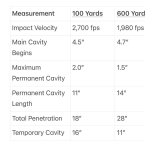
At 600 yards, the bullet produced a narrower wound cavity with greater penetration, as expected from the lower impact velocity.
100-Yard Results
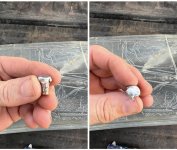
The bullet expanded rapidly and shed approximately three-quarters of the way through the wound channel, with multiple large fragments continuing through the remaining gel block.
600-Yard Results
The bullet expanded while remaining largely intact, shedding only a small amount of material during penetration. It maintained stable, straight-line penetration throughout the gel without excessive yaw or deviation.
⸻
Accuracy
Accuracy was outstanding throughout testing.
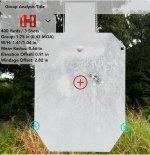
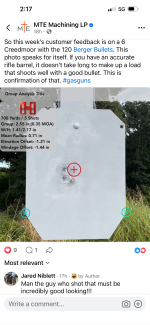
Using an MTE 6mm Creedmoor with a 26-inch 1:7 twist barrel at a muzzle velocity of 2,764 fps, I documented:
* 3-shot group at 400 yards: 0.42 MOA
* 5-shot group at 700 yards: 0.35 MOA
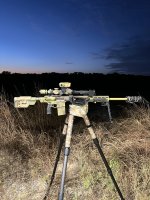
All groups were fired standing from a tripod in field conditions. The ballistic gel testing at both 100 and 600 yards was also conducted from this position.
⸻
Terminal Performance Analysis
Overall, the 120 LRHT performed very well for a BTHP/OTM-style hunting bullet. However, its terminal behavior is influenced by several aspects of its design.
Compared to Berger’s Hybrid bullets, the 120 LRHT has a long, slender nose with a relatively small frontal diameter. This provides less initial surface area during impact, meaning the nose must collapse farther before contacting the flat front of the lead core where full expansion begins.
For proper expansion, timing is critical. The nose must collapse straight rearward into the core. If impact velocity is too low, or impact conditions prevent this from occurring, the nose can fold to one side instead of collapsing directly backward.
When this occurs, the bullet may fail to expand normally and instead yaw or tumble after entering the target, producing less predictable terminal performance.
⸻
Impact Velocity
Because of its geometry, this bullet requires a higher minimum impact velocity than Berger’s Hybrid bullets.
While Berger Hybrids have demonstrated reliable expansion down to approximately 1,600 fps, the 120 LRHT appears to require approximately 1,800–1,900 fps for consistent expansion.
Greater impact resistance—such as striking heavier bone—can aid expansion, but maintaining adequate impact velocity remains the most important factor for reliable terminal performance.
Simply put, velocity is this bullet’s friend.
⸻
Impact Angle Considerations
Like most BTHP and OTM bullets, the 120 LRHT is also somewhat sensitive to impact angle.
Berger addressed the clogging issues commonly associated with small meplats by incorporating a large internal nose cavity. Even if debris fills the opening, the collapsing nose can still contact the flat front of the lead core and initiate expansion.
However, because of the bullet’s particularly long, slender nose, excessive impact angle increases the likelihood that the nose will collapse sideways rather than directly rearward. If this occurs before the bullet fully enters the animal, penetration can be shallow. If it occurs after entry, the bullet may yaw or tumble, producing less consistent wound channels.
These characteristics are not unique to the 120 LRHT, but the bullet’s geometry makes it somewhat more susceptible than shorter, wider-nosed BTHP designs.
⸻
Strengths
The long, slender nose also provides an advantage.
Because significant expansion begins later in penetration, the bullet is capable of passing through heavy hide, shoulder bone, or a mature boar’s shield before producing its maximum wound cavity inside the thoracic cavity. This can improve penetration on tougher animals compared to bullets that begin expanding almost immediately upon impact.
The bullet also offers excellent external ballistics, producing outstanding consistency and accuracy while retaining velocity exceptionally well.
⸻
Limitations
The tradeoff is its higher minimum expansion velocity.
Hunters should understand the bullet’s effective operating window and ensure expected impact velocities remain above approximately 1,800–1,900 fps for dependable terminal performance.
⸻
Final Thoughts
Overall, the Berger 120 LRHT is an excellent performer both externally and terminally. It delivers exceptional accuracy, high ballistic efficiency, and excellent terminal performance when used within its intended operating window.
Compared to the 105- and 109-grain Berger Hybrids, the 120 LRHT sacrifices some low-velocity expansion capability but gains durability at higher impact velocities and through heavier resistance, making it particularly well suited for shoulder impacts and larger-bodied game.
As with any hunting bullet, understanding its strengths and limitations is the key to achieving consistent results in the field.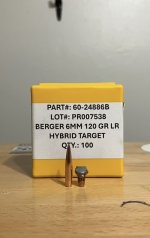

Overview
The 120-grain Berger LRHT is easy to load, extremely consistent, and delivers excellent accuracy. Because of its overall length, gas guns may require a shorter cartridge overall length for reliable magazine feeding, but loading was otherwise straightforward. Pricing is consistent with Berger’s other offerings.
For this evaluation, I conducted ballistic gel testing at both 100 and 600 yards and documented terminal performance on 19 animals (11 hogs and 8 coyotes) at distances ranging from 49 to 602 yards.
⸻
Field Performance
Close-Range Performance
At high impact velocities, the 120 LRHT proved to be extremely effective. Terminal performance on both hogs and coyotes was remarkably consistent.
Hog (49 yards)
* Impact Velocity: 2,694 fps
The bullet entered with a caliber-sized entrance hole, penetrated the shield, scapula, ribs, and entered the thoracic cavity. Significant tissue disruption began approximately 2 inches into the animal, producing extensive damage throughout the chest cavity. The thoracic cavity was essentially liquefied, with obvious fluid movement when the animal was handled.
The bullet exited after striking the off-side ribs, scapula, and shield. The remaining scapula was shattered, and a section of bone, shield, and hide was completely blown away, leaving an exit approximately 2.5 inches in diameter.
Thermal footage clearly shows blood and tissue being expelled from the exit wound immediately after impact, leaving a substantial blood pool at the point where the hog collapsed.
Coyote (87 yards)
* Impact Velocity: 2,641 fps
Terminal performance closely mirrored what was observed on the hog.
The bullet entered with a caliber-sized entrance hole, penetrated the scapula and ribs, and began significant expansion roughly 2 inches into the thoracic cavity. Internal damage to the chest cavity was extensive, and the lungs and surrounding tissues were completely destroyed.
The bullet exited after striking the off-side ribs and scapula, producing an exit wound measuring approximately 3.5 × 4 inches. A portion of the scapula and hide was blown away, while the remaining scapula was shattered.
⸻
Ballistic Gel Testing
The gel testing closely matched what was observed on animals. Bone and heavier tissue resistance in live animals caused expansion to begin slightly sooner than in bare gel, but the overall wound characteristics remained very similar.
At 600 yards, the bullet produced a narrower wound cavity with greater penetration, as expected from the lower impact velocity.
100-Yard Results
The bullet expanded rapidly and shed approximately three-quarters of the way through the wound channel, with multiple large fragments continuing through the remaining gel block.
600-Yard Results
The bullet expanded while remaining largely intact, shedding only a small amount of material during penetration. It maintained stable, straight-line penetration throughout the gel without excessive yaw or deviation.
⸻
Accuracy
Accuracy was outstanding throughout testing.
Using an MTE 6mm Creedmoor with a 26-inch 1:7 twist barrel at a muzzle velocity of 2,764 fps, I documented:
* 3-shot group at 400 yards: 0.42 MOA
* 5-shot group at 700 yards: 0.35 MOA
All groups were fired standing from a tripod in field conditions. The ballistic gel testing at both 100 and 600 yards was also conducted from this position.
⸻
Terminal Performance Analysis
Overall, the 120 LRHT performed very well for a BTHP/OTM-style hunting bullet. However, its terminal behavior is influenced by several aspects of its design.
Compared to Berger’s Hybrid bullets, the 120 LRHT has a long, slender nose with a relatively small frontal diameter. This provides less initial surface area during impact, meaning the nose must collapse farther before contacting the flat front of the lead core where full expansion begins.
For proper expansion, timing is critical. The nose must collapse straight rearward into the core. If impact velocity is too low, or impact conditions prevent this from occurring, the nose can fold to one side instead of collapsing directly backward.
When this occurs, the bullet may fail to expand normally and instead yaw or tumble after entering the target, producing less predictable terminal performance.
⸻
Impact Velocity
Because of its geometry, this bullet requires a higher minimum impact velocity than Berger’s Hybrid bullets.
While Berger Hybrids have demonstrated reliable expansion down to approximately 1,600 fps, the 120 LRHT appears to require approximately 1,800–1,900 fps for consistent expansion.
Greater impact resistance—such as striking heavier bone—can aid expansion, but maintaining adequate impact velocity remains the most important factor for reliable terminal performance.
Simply put, velocity is this bullet’s friend.
⸻
Impact Angle Considerations
Like most BTHP and OTM bullets, the 120 LRHT is also somewhat sensitive to impact angle.
Berger addressed the clogging issues commonly associated with small meplats by incorporating a large internal nose cavity. Even if debris fills the opening, the collapsing nose can still contact the flat front of the lead core and initiate expansion.
However, because of the bullet’s particularly long, slender nose, excessive impact angle increases the likelihood that the nose will collapse sideways rather than directly rearward. If this occurs before the bullet fully enters the animal, penetration can be shallow. If it occurs after entry, the bullet may yaw or tumble, producing less consistent wound channels.
These characteristics are not unique to the 120 LRHT, but the bullet’s geometry makes it somewhat more susceptible than shorter, wider-nosed BTHP designs.
⸻
Strengths
The long, slender nose also provides an advantage.
Because significant expansion begins later in penetration, the bullet is capable of passing through heavy hide, shoulder bone, or a mature boar’s shield before producing its maximum wound cavity inside the thoracic cavity. This can improve penetration on tougher animals compared to bullets that begin expanding almost immediately upon impact.
The bullet also offers excellent external ballistics, producing outstanding consistency and accuracy while retaining velocity exceptionally well.
⸻
Limitations
The tradeoff is its higher minimum expansion velocity.
Hunters should understand the bullet’s effective operating window and ensure expected impact velocities remain above approximately 1,800–1,900 fps for dependable terminal performance.
⸻
Final Thoughts
Overall, the Berger 120 LRHT is an excellent performer both externally and terminally. It delivers exceptional accuracy, high ballistic efficiency, and excellent terminal performance when used within its intended operating window.
Compared to the 105- and 109-grain Berger Hybrids, the 120 LRHT sacrifices some low-velocity expansion capability but gains durability at higher impact velocities and through heavier resistance, making it particularly well suited for shoulder impacts and larger-bodied game.
As with any hunting bullet, understanding its strengths and limitations is the key to achieving consistent results in the field.

 Instagram
 YouTube
 Facebook