

HAWKEYE BALLISTICS SERIES
VOLUME I
WHAT ACTUALLY KILLS GAME ANIMALS?
Understanding Terminal Ballistics Beyond the Myths
Aaron Peterson
Founder • Hawkeye Ammosmithing
Data-Driven Ballistics, Tested & Proven.
Series: Hawkeye Ballistics Series
Volume: I
Title: What Actually Kills Game Animals?
Subtitle: Understanding Terminal Ballistics Beyond the Myths
Author: Aaron Peterson
Date: July 2026
About This Publication
This publication examines what actually causes game animals to die after being struck by a hunting bullet, and how physics, anatomy, physiology, material science, bullet construction, impact velocity, and shot placement combine to determine terminal performance. Its purpose is not to promote a particular brand, bullet, cartridge, or rifle, but to provide readers with a framework for making informed decisions based on mechanisms rather than myths.
Copyright © 2026 Aaron Peterson. All rights reserved.
Executive Summary
Ask ten experienced hunters what actually kills a game animal after it has been shot, and you are likely to hear several different answers. Some will point to kinetic energy. Others will insist that blood loss is all that matters. Some credit hydrostatic shock, caliber, bullet weight, sectional density, expansion, penetration, retained weight, or whether the bullet exits.
Those observations are not necessarily useless, but they often begin in the middle of the story. A meaningful discussion of terminal ballistics should begin with biology: what actually causes death, and what kind of tissue damage initiates that process?
This publication begins there and builds outward. It examines how bullets damage tissue, how permanent and temporary cavities form, how hydraulic displacement and pressure effects fit into the wound event, why bullet construction matters, why animals can react differently to similar wounds, and how those principles should influence bullet, cartridge, rifle, and shot-placement decisions.
The objective is not to tell readers what product to buy. It is to give them enough understanding to evaluate a hunting system for themselves.
By the end of this publication, the reader should understand:
- What actually causes death after a gunshot wound.
- How bullets damage tissue and why different bullets produce different wounds.
- The relationship between permanent cavities, temporary cavities, hydraulic displacement, and pressure effects.
- What hydrostatic shock can—and cannot—explain.
- Why bullet construction and impact velocity are inseparable.
- Why animal reaction alone is a poor measure of terminal performance.
- How to choose bullets, cartridges, and rifles based on the job they must perform.
The Big Idea
Bullets do not kill.
Bullets damage tissue.
Physiological failure causes death.
Everything else discussed in this publication—energy, expansion, penetration, fragmentation, permanent cavities, temporary cavities, hydraulic displacement, hydrostatic shock, bullet construction, impact velocity, cartridge selection, rifle selection, and shot placement—matters only because it influences how effectively a bullet damages vital tissue.
Once that principle is understood, many long-standing arguments in terminal ballistics become easier to evaluate. The question stops being which number, cartridge, or bullet is universally best and becomes a more useful question: what damage must be produced, under what conditions, and what combination of bullet and delivery system is most likely to produce it?
Quick Reference
Estimated Reading Time
40–45 minutes
Difficulty
Intermediate to Advanced
Intended Audience
Hunters, reloaders, long-range shooters, firearms enthusiasts, and students of terminal ballistics
Topics Covered
Terminal ballistics; wound mechanics; permanent and temporary cavities; hydraulic displacement; hydrostatic shock; bullet construction; bullet selection; cartridge and rifle selection
Table of Contents
1. Introduction
2. What Actually Causes Death?
3. How Bullets Damage Tissue
4. Permanent Cavities and Temporary Cavities
5. Hydraulic Displacement: The Force Behind Temporary Cavitation
6. Hydrostatic Shock: Myth, Reality, and Misunderstanding
7. Why Bullet Construction Matters
8. Why Animals React Differently
9. What Bullet Should You Choose?
10. What Cartridge and Rifle Should You Choose?
11. Final Thoughts
Chapter 1
Introduction
Why can two animals struck in nearly the same location produce completely different outcomes?
Fundamental Principle #1Introduction
Why can two animals struck in nearly the same location produce completely different outcomes?
- Bullets do not kill. They damage tissue. Physiological failure causes death.
Every experienced hunter has seen some version of the same contradiction. One deer drops instantly as though the ground disappeared beneath it. Another, struck in what appears to be nearly the same location, runs eighty yards, or more, before collapsing. One animal barely acknowledges the shot before tipping over. Another travels a surprising distance despite receiving what later proves to be an unsurvivable wound.
Those experiences naturally invite simple explanations: hydrostatic shock, more energy, a harder-hitting cartridge, a bullet that dumped its energy, or a bullet that failed to do so. Sometimes those explanations contain part of the truth. Often they confuse an observation with the mechanism that produced it.
Terminal ballistics is difficult to reduce to a single rule because several disciplines meet at the same instant. Physics determines how the projectile arrives and transfers force. Material science influences how the bullet deforms, fragments, sheds mass, or retains it. Anatomy determines what structures lie in the wound path. Physiology determines how the animal responds when those structures are damaged.
This publication therefore begins with a different question than most cartridge or bullet debates. Before asking which bullet is best, which cartridge hits hardest, or whether hydrostatic shock is real, we first need to ask what actually causes death.
Once that answer is understood, the rest of terminal ballistics becomes easier to organize. Energy, wound cavities, hydraulic displacement, pressure effects, impact velocity, bullet construction, and shot placement stop being isolated talking points and become parts of the same chain of cause and effect.
COMMON MISCONCEPTION:
“A bullet with more energy automatically kills faster.”
Reality: Energy is not itself a wounding mechanism. It is the capacity to perform work. Until that energy is converted into meaningful tissue damage, the number on a ballistic chart has accomplished nothing.
AUTHOR INSIGHT:
One of the greatest obstacles to understanding terminal ballistics is that hunters naturally remember the extraordinary events. The buck that dropped instantly becomes a lifelong story. The animal that traveled an unexpected distance despite a seemingly perfect hit becomes another. The ordinary recoveries in between are quietly forgotten. Understanding terminal performance requires looking beyond memorable reactions and asking what mechanism actually produced the outcome.
Chapter Summary
- Terminal ballistics is best understood by studying mechanisms rather than isolated observations.
- Visible reaction does not necessarily reveal wound severity or time to death.
- The central question is not which bullet kills best, but what actually causes death.
Before discussing bullets, energy, or wound cavities, we must first understand the biological processes that actually end an animal’s life.
Chapter 2
What Actually Causes Death?
What physiological failures ultimately end an animal’s life?
Fundamental Principle #2What Actually Causes Death?
What physiological failures ultimately end an animal’s life?
- A bullet is not a source of death. It is a source of tissue damage. Death occurs after that damage causes one or more critical physiological systems to fail.
Before discussing hydrostatic shock, temporary cavities, bullet expansion, or cartridge selection, we need to answer the most fundamental question in terminal ballistics: what actually causes a game animal to die after it has been shot?
Hunters frequently describe a cartridge or bullet as having tremendous killing power. The phrase is familiar, but it can obscure the mechanism. A projectile damages tissue. Whether an animal dies—and how quickly—depends on how that damage affects the body’s ability to continue functioning.
That distinction is not merely semantic. It provides the framework for evaluating virtually every bullet, cartridge, and hunting scenario discussed later in this publication.
The Chain of Events
Bullet Impact → Tissue Damage → Physiological Failure → Death
Thinking in this sequence explains why similar entrance wounds can produce very different outcomes, why one animal collapses immediately while another travels a considerable distance, and why more kinetic energy does not automatically mean a faster death. The bullet begins the process; the biological consequences of the wound determine how it ends.
The Primary Pathways to Death
Exsanguination — Blood Loss
Severe blood loss is one of the most common pathways to death in hunting wounds. Damage to the heart, major vessels, lungs, liver, and other highly vascular tissues can reduce circulating blood volume and blood pressure until the brain and other vital organs no longer receive adequate oxygenated blood. Damage to the heart or a major vessel is therefore important because of the physiological failure it initiates: catastrophic circulatory collapse.
Hypoxia — Oxygen Deprivation
Extensive lung damage can impair oxygen exchange even while the heart continues to circulate blood for a period of time. The animal may remain conscious and capable of movement while using oxygen already present in the blood and tissues. As that reserve is depleted and oxygen delivery becomes inadequate, the brain and other organs lose the ability to function.
Central Nervous System Failure
Catastrophic damage to the brain, upper spinal cord, or other critical nervous structures can produce immediate incapacitation and, depending on the injury, rapid death. This mechanism differs from blood loss or hypoxia because voluntary function may cease before the slower processes of circulatory or respiratory collapse have run their course.
Progressive Organ Failure and Sepsis
Not every fatal wound causes rapid death. Injuries involving the digestive tract or other abdominal organs can lead to contamination, infection, inflammation, dehydration, and progressive organ failure over hours or days. Such wounds may ultimately be fatal, but they are among the least desirable outcomes from both practical and humane standpoints.
Death, Incapacitation, and Reaction Are Not the Same Thing
An animal may collapse immediately yet remain biologically alive for a period of time. Another may remain standing despite an unsurvivable wound. A third may sprint a considerable distance before rapidly succumbing to catastrophic blood loss or oxygen deprivation.
A visible reaction tells us that something happened. It does not, by itself, tell us what happened. That distinction is essential when evaluating bullets and cartridges from field observations and necropsies.
COMMON MISCONCEPTION:
“If the animal dropped instantly, the bullet killed it faster.”
Reality: Not necessarily. Immediate collapse may result from direct nervous-system disruption, skeletal failure, temporary neurological dysfunction, or other mechanisms. An animal that runs may still have received an unsurvivable wound. Reaction alone is an unreliable measure of terminal performance.
AUTHOR INSIGHT:
What we witness in the first second after impact is only one moment in a longer physiological process. The real story is told by what the bullet damaged, how those tissues failed, and how quickly those failures progressed.
Chapter Summary
- Bullets initiate tissue damage; physiological failure causes death.
- Blood loss, oxygen deprivation, central nervous system failure, and progressive organ failure are major pathways to death.
- Reaction, incapacitation, and death are related, but they are not the same event.
Now that we understand what actually causes death, we can examine how bullets produce the tissue damage that initiates those physiological failures.
Chapter 3
How Bullets Damage Tissue
If tissue damage is what matters, how does a bullet actually produce it?
FUNDAMENTAL PRINCIPLE #3How Bullets Damage Tissue
If tissue damage is what matters, how does a bullet actually produce it?
- Energy is potential. Tissue damage is the wounding mechanism.
If bullets do not directly kill animals, the next logical question is simple: how do bullets actually damage tissue?
Nearly every projectile wound can be understood through a small number of fundamental mechanisms. Bullet designs may differ dramatically, but the underlying physics remain the same. Tissue can be crushed, cut, stretched, torn, fragmented, displaced, and subjected to rapidly changing pressure. What differs from one projectile to another is the amount, location, timing, and distribution of those effects.
Understanding these mechanisms is important because they form the foundation for everything that follows. Expansion, penetration, fragmentation, permanent cavities, temporary cavities, hydraulic displacement, and pressure effects are not separate worlds. They are different parts of the same wound event.
Tissue Must Be Damaged to Matter
A bullet carrying 3,000 foot-pounds of kinetic energy does not automatically inflict massive damage simply because it possesses that amount of energy. If it fails to expand, passes through relatively little vital tissue, and exits while retaining substantial velocity, much of its original energy may leave with it.
Conversely, a bullet arriving with only 1,000 foot-pounds (or even less) may produce substantially more meaningful damage if its construction and impact conditions allow it to expand, fragment, displace tissue, and penetrate through critical structures.
This illustrates a central point: energy is not itself a wound. Energy is the capacity to perform work. The terminal question is how much useful work the projectile performs within the animal, where that work occurs, and whether the resulting damage is sufficient to initiate rapid physiological failure.
That is why energy figures alone cannot describe terminal performance. Bullet construction, impact velocity, frontal area, penetration, fragmentation, resistance encountered, and shot placement all influence how the bullet's available energy is converted into damage.
The Primary Mechanisms of Tissue Damage
1. Crushing and Cutting
The most direct form of damage occurs when tissue is physically crushed, cut, or disrupted by the bullet and any fragments it produces. Tissue within this path is permanently damaged. Blood vessels remain severed. Organs remain lacerated. This direct destruction forms the foundation of the permanent cavity.
2. Stretching and Tearing
As a projectile advances, surrounding tissue is accelerated outward. Some tissues can stretch considerably and recover. Others tear or rupture when their elastic limits are exceeded. The significance of stretching therefore depends not only on the size of the temporary cavity, but also on the type of tissue being stretched and the rate at which that deformation occurs.
3. Fragmentation and Secondary Projectiles
Some bullets intentionally or unintentionally shed material during penetration. Bullet fragments can create additional wound paths and increase the volume of damaged tissue. Bone fragments can also become secondary projectiles. Fragmentation is neither automatically desirable nor automatically a failure; its value depends on whether adequate penetration and vital-tissue disruption are still achieved. The starting mass of the bullet has a significant influence on this, which is best quantified by its sectional density.
4. Pressure and Hydraulic Effects
A high-velocity projectile moving through water-rich tissue produces rapidly changing pressure and displacement. These effects contribute to temporary cavitation and may contribute to tissue disruption beyond the bullet's direct path. Their practical significance depends on magnitude, location, tissue type, and the rest of the wound event.
Not All Tissue Responds the Same Way
Lung tissue does not respond like liver tissue. Muscle does not respond like bone. Blood vessels, nerves, skin, and hollow organs each have different mechanical properties and different tolerances for deformation.
This is one reason apparently similar impacts can produce different wound patterns. The projectile does not travel through a uniform medium. It encounters changing densities, structures, fluid content, elastic properties, and resistance throughout the wound path.
A temporary cavity that causes little permanent injury in elastic tissue may tear a more fragile organ. A bullet that expands rapidly after encountering bone may behave differently than the same bullet entering through ribs and lung tissue.
The Goal Is Not Maximum Energy Transfer
It is tempting to assume that the ideal hunting bullet should transfer all of its energy as rapidly as possible. That is an oversimplification.
A projectile that expands or fragments so violently that it expends most of its available energy before reaching vital structures may create dramatic superficial damage while failing at the job that matters. At the other extreme, a projectile that penetrates deeply while producing minimal disruption may pass through critical anatomy without creating the volume of damage desired for rapid physiological collapse.
The objective is therefore not maximum energy transfer, maximum penetration, maximum expansion, or maximum fragmentation in isolation. The objective is sufficient penetration combined with sufficient tissue destruction in the structures that matter.
COMMON MISCONCEPTION:
“More energy means more damage.”
Reality: More available energy creates more potential to perform work, but the wound depends on how, where, and over what distance that energy is converted into tissue disruption. A lower-energy projectile can produce more meaningful damage than a higher-energy projectile if it interacts with tissue more effectively.
EVERY BULLET IS A COMPRAMISE
This reality leads to one of the most important concepts in terminal ballistics: Every bullet design represents a compromise. Some designs prioritize expansion. Some prioritize penetration. Some prioritize weight retention. Some prioritize fragmentation. Some attempt to balance all of these characteristics.
No bullet can maximize every desirable trait simultaneously. Understanding these tradeoffs is far more valuable than memorizing brand names or marketing claims. Before we can evaluate those tradeoffs, however, we need to understand the two wound structures that dominate virtually every discussion of terminal ballistics: the permanent cavity and the temporary cavity.
AUTHOR INSIGHT:
I stopped treating kinetic-energy figures as a shortcut for terminal performance years ago. The number can describe part of what a projectile brings to the impact, but it cannot tell me what the bullet will do after it arrives. For that, I need to know the bullet, the impact velocity, the resistance it will encounter, and the anatomy in the intended wound path.
Chapter Summary
- Energy provides the potential to perform work; tissue damage is the actual wounding mechanism.
- Bullets damage tissue through direct destruction, stretching and tearing, fragmentation, and pressure-related effects.
- Tissue type and the structures encountered strongly influence the resulting wound.
- The objective is not to maximize one terminal characteristic, but to combine adequate penetration with sufficient vital-tissue destruction.
Ask Yourself
When comparing two loads, am I comparing energy figures—or am I asking how each bullet is likely to use its available energy after impact?
Next
To understand how those mechanisms appear in an actual wound, we next need to separate two closely related concepts: the permanent cavity and the temporary cavity.
Chapter 4
Permanent Cavities and Temporary Cavities
What remains destroyed, and what exists only for an instant?
Permanent Cavities and Temporary Cavities
What remains destroyed, and what exists only for an instant?
FUNDAMENTAL PRINCIPLE #4
- The permanent cavity is the tissue left damaged. The temporary cavity is the transient displacement of tissue around the wound path.
Virtually every discussion of terminal ballistics eventually reaches two terms: permanent cavity and temporary cavity.
They are often discussed as though they are competing explanations for wounding. They are not. They are different manifestations of the same event—the projectile moving through tissue.
Understanding the distinction matters because many arguments about bullet performance and hydrostatic shock begin with confusion about what these cavities actually represent.
The Permanent Cavity
The permanent cavity is the tissue that remains physically damaged after the wound event. It includes tissue crushed, cut, torn, lacerated, or otherwise destroyed by the projectile and its fragments.
Every penetrating bullet creates some form of permanent cavity. Its size and shape depend on frontal area, expansion, fragmentation, yaw or orientation, penetration depth, the structures encountered, and the mechanical behavior of the projectile.
The permanent cavity is fundamental because the damage remains. A severed vessel remains severed. Destroyed lung tissue remains destroyed. A lacerated liver does not spring back into its original condition when the temporary cavity collapses.
The Temporary Cavity
The temporary cavity is different. As the bullet advances, it accelerates surrounding tissue away from the wound path. For a brief period, tissue is displaced outward before elasticity and surrounding forces pull it back toward equilibrium.
The temporary cavity is therefore not simply an empty hole left behind the bullet. It is a transient deformation of the target medium.
Some displaced tissue may recover with little lasting injury. Other tissue may tear, rupture, or separate when the deformation exceeds its mechanical limits. The temporary cavity can therefore contribute to permanent damage, but the amount of lasting injury cannot be determined from cavity size alone.
Why Tissue Type Matters
Highly elastic tissue can often tolerate more stretching than relatively fragile or inelastic structures. Skeletal muscle may deform substantially and recover. The liver, kidneys, brain, and some vascular structures are generally less tolerant of rapid deformation.
Even the lungs require nuance. Their air-filled, elastic structure can tolerate some stretching, yet a projectile and its fragments can still destroy enormous numbers of vessels and alveolar structures. The practical wound is the result of all mechanisms acting together, not a simple label attached to one tissue type.
The Two Cavities Are Connected
A bullet with greater frontal area may directly crush more tissue while also displacing more tissue outward. A fragmenting projectile may create multiple permanent wound tracks while contributing to a broad zone of disruption. A deeply penetrating, minimally expanding projectile may create a long but comparatively narrow permanent cavity and a smaller temporary cavity.
For this reason, asking whether the permanent cavity or temporary cavity is 'more important' is often the wrong question. The useful question is how the entire wound event damages the structures necessary to produce rapid physiological failure.
COMMON MISCONCEPTION:
“Temporary cavities are either everything or nothing.”
Reality: A temporary cavity is a real physical event, but its significance depends on the tissue involved and the magnitude and rate of deformation. Some tissue stretches and recovers. Other tissue tears and becomes part of the permanent injury.
AUTHOR INSIGHT:
High-speed footage can make a temporary cavity look spectacular, but a dramatic visual is not automatically a measure of lethality. The important question is what that displacement actually did to the tissues and organs involved.
Chapter Summary
The permanent cavity is tissue that remains damaged after the wound event.
The temporary cavity is transient tissue displacement around the projectile path.
Temporary cavitation can contribute to permanent injury when tissue is stretched beyond its limits.
The significance of either cavity depends on location, tissue type, projectile behavior, and the rest of the wound event.
Ask Yourself
When I see a large cavity in gelatin or high-speed footage, am I assuming that all displaced material would become permanently damaged living tissue?
Next
If the temporary cavity is tissue being driven outward, what actually creates that motion? The answer begins with hydraulic displacement.
Chapter 5
Hydraulic Displacement
Why does tissue move the way it does?
Hydraulic Displacement
Why does tissue move the way it does?
FUNDAMENTAL PRINCIPLE #5
- A projectile cannot occupy the same space as the tissue in front of it. That tissue must be displaced.
To understand temporary cavitation and the pressure effects that accompany a projectile wound, we first need to understand a simple physical reality: a bullet cannot occupy the same space as the tissue it encounters.
As the projectile advances, the material in front of it must move. In living tissue, much of that material is water or water-rich biological matter. The rapid acceleration of that material away from the projectile path is the foundation of hydraulic displacement.
Tissue Is a Water-Rich Medium
Animal tissue is composed largely of water, although the exact proportion varies by tissue type. Water is only slightly compressible under ordinary wound-ballistic conditions. That means a projectile entering tissue cannot simply compress the target material out of existence. It must accelerate and displace it.
The result is movement outward from the bullet path. The faster that movement occurs and the greater the volume of tissue being accelerated, the larger the resulting transient deformation can become.
The Bullet as a Moving Displacer
A useful analogy is a hull moving through water. The water must move aside to make room. A bullet does something conceptually similar, but at vastly greater speed or rate, over a very short time, and in a far more complex medium.
The amount and pattern of displacement depend on more than caliber alone. A bullet that expands presents greater frontal area. A bullet that fragments may create multiple moving surfaces. A bullet that sheds petals or core and jacket material can distribute damage differently than a projectile that remains intact.
This is one reason two bullets of the same caliber and similar impact energy can produce very different wound patterns.
Expansion Changes the Interaction
As frontal area increases, more tissue must be accelerated away from the projectile's path. That generally increases drag on the projectile and can increase local displacement, stretching, and pressure.
But the relationship is a balance. Increasing frontal area can increase tissue disruption while also reducing penetration. Retaining a smaller frontal area can preserve penetration while reducing the rate at which energy and momentum are lost to the surrounding tissue.
Bullet construction determines how that balance evolves throughout the wound path.
Expansion and Fragmentation Can Work Together
Expansion and fragmentation are not necessarily separate or mutually exclusive behaviors.
Many soft or fragmenting lead-core bullets begin expanding as they encounter resistance while simultaneously shedding portions of their jacket and core. Those fragments can create additional wound paths and increase the volume of disrupted tissue, while the remaining portion of the bullet may continue to expand, deform, and penetrate.
A common misconception is to imagine bullet performance as a choice between two extremes: a bullet either expands and penetrates, or it fragments and stops. Real terminal behavior is often considerably more complex.
A soft lead-core bullet with sufficient starting mass may expand, shed substantial material, continue deforming, and still retain enough mass and momentum to carry the wound through vital structures—or, under some conditions, even exit. Fragmentation and penetration are therefore not necessarily opposites.
When the bullet begins with sufficient mass and its construction is appropriate for the impact velocity and resistance encountered, this combination can produce an effective balance. Material shed from the bullet contributes to tissue disruption by creating additional wound paths and interacting with surrounding tissue, while the remaining mass continues forward and extends the primary wound through the vital cavity.
This is why weight loss should not automatically be interpreted as bullet failure. You should ask:
- Where was the weight shed?
- What damage did that shedding produce?
- How quickly was the mass lost?
- And did sufficient mass and momentum remain to achieve the necessary penetration?
The balance is important. If too much mass is lost too early, penetration may become inadequate. If a bullet retains nearly all of its mass while expanding very little, it may penetrate deeply but produce less tissue disruption than desired.
Proper terminal performance occurs when expansion, fragmentation, retained mass, and penetration work together to create sufficient damage throughout the necessary depth of the wound. Contrary to what some believe, this is actually easily achievable with reliability and predictability.
The exact balance depends on bullet construction, starting mass, impact velocity, the resistance encountered, and the amount of frontal area presented by the remaining projectile as it continues to penetrate.
This is also why retained-weight percentages, by themselves, tell us relatively little about whether a bullet performed well. A bullet that retains 95 percent of its weight is not automatically superior to one that retains 50 percent. If the weight shed by the latter bullet contributed meaningfully to tissue disruption while the remaining projectile still penetrated through the necessary vital structures, that weight loss was not necessarily a failure.
It may have been part of how the bullet was indeed effective.
The goal is not maximum weight retention or maximum fragmentation. The goal is the appropriate balance of tissue disruption and penetration for the conditions encountered.
Temporary Cavitation Is a Result of Displacement
The temporary cavity is the visible or measurable result of tissue being accelerated outward and then returning toward equilibrium. It is not a mysterious separate force.
This matters because it connects bullet mechanics directly to wound mechanics. Expansion, fragmentation, retained mass, frontal area, velocity, and resistance encountered all influence how tissue is displaced.
Displacement Also Produces Pressure Disturbances
Rapidly accelerating a water-rich medium produces changing pressure. Those disturbances can propagate away from the immediate projectile path.
Their existence is not the central controversy. Pressure changes associated with ballistic impact can be measured. The more difficult question is what biological significance those pressure effects have under real hunting conditions.
That question leads directly to one of the most disputed terms in terminal ballistics: hydrostatic shock.
COMMON MISCONCEPTION:
“The temporary cavity is a separate force acting independently of the bullet.”
Reality: Temporary cavitation is a consequence of the projectile displacing and accelerating tissue. Bullet behavior and tissue properties determine the magnitude and consequences of that displacement.
AUTHOR INSIGHT:
When people describe a chest cavity appearing to 'balloon/bubble' or a wound looking far wider than the bullet itself, they are observing the consequences of rapid tissue displacement. The terminology used to describe it may differ, but the underlying event still has to obey the same physics.
Chapter Summary
- A projectile must displace the tissue occupying the space through which it travels.
- Water-rich tissue is accelerated outward, producing transient deformation and temporary cavitation.
- Expansion, fragmentation, frontal area, velocity, and resistance influence the magnitude and pattern of displacement.
- Rapid displacement also produces pressure disturbances that lead into the hydrostatic-shock discussion.
Ask Yourself
When I compare two bullets, how will their construction change the amount, rate, and location of tissue displacement—not merely their recovered diameter?
Next
Now that we understand the physical basis of displacement and temporary cavitation, we can examine what pressure waves really contribute—and where the idea of hydrostatic shock is often overstated or dismissed too broadly.
Chapter 6
Hydrostatic Shock
What role do pressure waves really play?
Hydrostatic Shock
What role do pressure waves really play?
FUNDAMENTAL PRINCIPLE #6
- Pressure effects can be part of a ballistic wound, but they do not replace the need for sufficient damage to critical tissue.
Few terms in terminal ballistics generate more disagreement than hydrostatic shock. Some hunters use it to explain virtually every dramatic collapse. Others reject the concept entirely and insist that only tissue physically touched by the bullet can matter.
Both positions can become too absolute.
A projectile moving rapidly through water-rich tissue produces displacement, temporary cavitation, and changing pressure. Those pressure disturbances are real. The harder question is how much they contribute to permanent injury or incapacitation in a particular wound.
What Is Usually Meant by Hydrostatic Shock?
The term is commonly used to describe physiological or tissue effects associated with pressure waves generated by a projectile passing through living tissue.
The definition is often used inconsistently. Sometimes it refers to local pressure and temporary cavitation. Sometimes it refers to remote effects away from the wound path. Sometimes it is used as a catch-all explanation for an animal collapsing immediately.
That inconsistency is one reason the debate becomes confused. Before asking whether hydrostatic shock is 'real,' we need to separate measurable physical effects from claims about what those effects necessarily accomplish.
What We Can Say With Confidence
- Projectile impact and penetration can generate measurable pressure changes in tissue and tissue simulants.
- Rapid displacement produces temporary cavitation and mechanical loading beyond the projectile's direct diameter.
- Some tissues are more vulnerable than others to rapid stretching and pressure-related loading.
- Pressure effects occur as part of the same wound event as direct crushing, tearing, fragmentation, and cavitation.
What Remains More Difficult to Prove in the Field
- A real hunting wound is not a controlled laboratory experiment. The animal's anatomy, exact shot path, impact velocity, bullet behavior, nervous-system involvement, skeletal damage, blood loss, and physiological state all overlap.
- When an animal collapses immediately without an obvious direct brain or spinal hit, it can be difficult to isolate a single cause. Pressure-related neurological effects may contribute in some cases. So may rapid nervous-system disruption near the wound, skeletal failure, reflexive responses, or combinations of mechanisms.
- The scientifically responsible position is therefore neither that pressure effects explain everything nor that they can never matter.
This is the practical point that matters most to hunters.
Even if pressure-wave effects contribute to incapacitation or additional injury, a hunting bullet still needs to penetrate adequately and damage critical structures. A poorly placed shot does not become reliable merely because the projectile generated a pressure wave.
Animals ultimately die because essential physiological systems fail. Pressure effects may influence the route or speed of that failure, but they do not make anatomy irrelevant.
Why Some Animals Drop Instantly
Immediate collapse can result from several mechanisms: direct central nervous system injury, disruption of important nervous structures, skeletal support failure, rapid neurological dysfunction, severe trauma, and potentially pressure-related effects.
More than one mechanism may occur at the same time. That is why a single field observation rarely proves a universal theory.
Why Some Animals Run Despite Fatal Wounds
The opposite observation is equally important. An animal can sustain a completely unsurvivable wound and still remain conscious and mobile for several seconds.
If the brain continues receiving enough oxygenated blood—or retains enough oxygen for brief continued function—the animal may cover substantial distance before circulatory or respiratory collapse occurs. Running after the shot does not automatically mean the bullet failed, just as dropping instantly does not automatically prove that one bullet or cartridge possesses superior killing power.
COMMON MISCONCEPTION:
“Either hydrostatic shock is the reason animals drop instantly, or hydrostatic shock is a myth.”
Reality: The physical pressure effects associated with projectile impact are real. Their biological significance varies with magnitude, location, tissue type, and the rest of the wound. They should neither be treated as magic nor dismissed as though no pressure-related effects exist.
AUTHOR INSIGHT:
The hydrostatic-shock argument often becomes less useful than the wound itself. I care less about winning the terminology debate than understanding what the bullet actually did: where it penetrated, how it changed shape, how much tissue it disrupted, what structures were damaged, and how quickly physiological failure followed.
Chapter Summary
- Pressure disturbances associated with ballistic impact are real and measurable.
- Their contribution to permanent injury or incapacitation varies and is difficult to isolate in field observations.
- Hydrostatic shock does not replace adequate penetration or destruction of critical tissue.
- Immediate collapse and post-shot running can each result from multiple overlapping mechanisms.
Am I using 'hydrostatic shock' as an explanation for an observed reaction, or do I actually know which anatomical and physiological mechanisms produced that reaction?
Next
If the wound depends on how a projectile expands, fragments, penetrates, and displaces tissue, the next question becomes unavoidable: what determines those behaviors? The answer is bullet construction.
Chapter 7
Why Bullet Construction Matters
The cartridge delivers the projectile. The bullet determines what happens after impact.
Why Bullet Construction Matters
The cartridge delivers the projectile. The bullet determines what happens after impact.
FUNDAMENTAL PRINCIPLE #7
- The cartridge is the delivery system. The bullet is the terminal tool.
At this point, the central relationship should be clear. Animals die when critical physiological systems fail. Those systems fail because vital tissues are damaged. The amount, location, and character of that damage depend heavily on what the bullet does after impact.
That is why bullet construction matters so much.
Hunters often devote enormous attention to cartridge names, caliber, muzzle energy, and velocity. Those variables matter, but they do not directly describe the wound. The cartridge launches the projectile. The bullet is the component that actually interacts with tissue.
Two bullets of the same diameter and weight, launched at the same velocity, can behave very differently because their jackets, cores, bonding methods, cavities, tips, alloys, ogive geometry, and intended failure modes are different. One may expand rapidly and shed substantial mass. Another may mushroom slowly and retain nearly all of its weight. A third may shed petals while preserving a penetrating shank. The wound cannot be predicted from caliber and energy alone.
The Goal Is Not Maximum Anything
Terminal performance is a balancing problem. Maximum expansion can reduce penetration. Maximum penetration can come with less tissue disruption. Maximum weight retention may preserve a projectile for deep penetration but can also reduce the amount of material shed into surrounding tissue. Maximum fragmentation may produce extensive disruption but become undesirable if too much mass is lost before critical structures are reached.
No bullet can maximize every desirable characteristic simultaneously. Every design is a set of tradeoffs.
The useful question is therefore not which bullet is universally best. It is which set of tradeoffs best matches the animal, impact velocity, shot angle, resistance encountered, required range, and wound path the hunter is asking the bullet to handle.
Expansion and Frontal Area
Expansion increases the frontal area presented to tissue. A larger frontal area generally displaces more tissue, increases drag, and can enlarge both the directly damaged wound path and the surrounding zone of temporary displacement.
But there is a difference between expansion and adequate expansion. A projectile can technically deform while still presenting too little frontal area to create the desired amount of tissue disruption. This is especially relevant when tougher bullets impact at the lower end of their useful velocity range.
The opposite problem is over-expansion. A projectile that expands too rapidly for its mass, construction, impact velocity, and the resistance encountered may lose forward momentum too quickly and fail to penetrate as deeply as required.
Expansion is therefore not a binary event. The important questions are how much the bullet expands, how quickly it expands, how much mass remains, and what penetration is achieved after that expansion occurs.
Penetration
No amount of dramatic expansion matters if the bullet fails to reach the structures that must be damaged.
Penetration depends on the projectile's mass, retained mass, shape, frontal area, construction, impact velocity, orientation, and the resistance encountered along the wound path. Bone, muscle, organs, hide, and changing shot angles can all alter the demands placed on the bullet.
Adequate penetration does not necessarily mean maximum penetration or an exit wound. It means penetrating far enough to damage the intended vital structures under the conditions in which the bullet is used.
Fragmentation and Weight Shedding
Fragmentation is often treated as synonymous with bullet failure. That is too simplistic.
When a projectile sheds material after reaching sufficient depth, those fragments can create additional wound tracks, increase the volume of damaged tissue, and accelerate the transfer of energy into the surrounding medium. Many highly effective hunting bullets intentionally or predictably shed some portion of their mass.
The problem is not weight loss by itself. The problem is losing too much useful mass too early, before adequate penetration has been achieved.
A soft or fragmenting bullet with sufficient starting mass can shed material, produce a broad zone of disruption, and still retain enough momentum to continue through the vital region. The same basic construction in a projectile that is too light for the impact conditions may expand or fragment too rapidly and produce shallow performance.
Weight Retention Is a Tool, Not a Score
Recovered-bullet photographs often encourage hunters to judge performance by retained-weight percentage. A bullet retaining 95 or 100 percent of its mass looks impressive. A bullet recovered in fragments may look like a failure.
But retained weight is not the objective. It is one variable that influences the way the bullet performs.
A high-retention projectile may be exactly what is needed for deep penetration through heavy resistance. A projectile that sheds substantial mass may produce a wider and more destructive wound while still penetrating adequately. The correct evaluation is not which recovered bullet looks prettier. It is whether the bullet produced the required damage in the required location.
COMMON MISCONCEPTION:
“A bullet that comes apart failed, while a bullet that retains nearly all of its weight succeeded.”
Reality: A recovered projectile is evidence of how the bullet changed—not a complete scorecard of the wound. Weight loss can be productive if adequate penetration and vital-tissue destruction are achieved. High retained weight can be useful, but it is not automatically evidence of superior lethality.
Sectional Density, Mass, and Construction
Sectional density is often used as a way to compare the amount of projectile mass relative to its diameter. It can be useful, but it should never be separated from construction.
A high-sectional-density soft bullet and a high-sectional-density monolithic bullet do not necessarily behave alike. A soft projectile may benefit from additional starting mass because it is expected to expand and shed material. That extra mass can help preserve useful momentum after the initial disruption.
A very tough projectile that retains nearly all of its mass may not need the same degree of starting sectional density for the same animal and shot path. Excess mass combined with limited expansion can simply increase penetration beyond what is useful.
Sectional density is therefore not a universal ranking system. Its practical value depends on what the bullet is designed to do after impact.
Impact Velocity Is Part of Bullet Construction
A bullet design cannot be evaluated independently of impact velocity.
The same projectile may behave aggressively at close range, perform ideally at moderate distance, and show limited expansion at long range. A bullet that works beautifully from one cartridge may behave differently when launched substantially faster or slower from another.
For that reason, muzzle velocity is only the beginning of the terminal discussion. What matters at the animal is impact velocity.
Manufacturers may publish minimum expansion velocities, but 'some expansion' and the degree of expansion a hunter considers adequate are not always the same thing. Real terminal performance should be evaluated across the entire impact-velocity window in which the bullet will actually be used.
The Major Bullet Design Families
Traditional Cup-and-Core Bullets
Traditional non-bonded lead-core bullets generally use a jacket surrounding a lead or lead-alloy core. Their behavior varies enormously with jacket thickness, taper, core hardness, geometry, and impact velocity.
Many are designed to expand readily and may shed meaningful amounts of core and jacket material. When appropriately matched to impact conditions, they can produce broad wound channels and excellent terminal performance. When driven too fast into heavy resistance with insufficient mass, some can expand excessively and penetrate less deeply than desired.
Bonded Bullets
Bonded bullets mechanically or chemically attach the core to the jacket to reduce separation and increase retained mass. They often provide a useful balance of expansion and penetration, particularly when impact resistance or velocity is relatively high.
The tradeoff is that tougher construction generally requires sufficient impact velocity and resistance to produce adequate expansion. At lower impact velocities, a bullet that is excellent at close range may create a narrower wound than a softer design.
Partition-Style Bullets
Partition-style designs allow the forward section to expand while preserving a rear section for continued penetration. The concept deliberately separates the jobs of early expansion and deep penetration.
As with every design, actual performance depends on impact velocity, projectile mass, and the structures encountered. Construction methods can also influence consistency and precision, particularly at longer ranges, so terminal design should still be evaluated as part of the complete shooting system.
Mushrooming Monolithic Bullets
Copper and copper-alloy monolithic bullets are commonly designed to open into petals while retaining most, if not all, of their original mass. Their strength and high weight retention can provide deep, reliable penetration.
Because they are relatively tough, they generally depend on adequate impact velocity to create substantial expansion. A monolithic bullet that technically opens at a low velocity may still produce less frontal area and tissue disruption than it does at a higher impact velocity.
In my own observations, many traditional mushrooming monolithic designs become notably more convincing when impact velocity remains around or above roughly 2,200 feet per second, although individual designs differ and some are engineered to expand more readily than others.
Petal-Shedding Monolithic Bullets
Some monolithic designs intentionally shed nose petals while retaining a solid shank. This approach attempts to combine early disruption and multiple secondary wound paths with a remaining projectile capable of deep penetration.
The design can be highly effective when the shedding event occurs reliably, symmetrically, and the remaining shank continues to create meaningful displacement. Alloy, nose geometry, impact velocity, and the shape of the remaining shank all influence the result. Not all designs are equal.
Soft, Fragmenting, and Match-Derived Bullets
Some thin-jacketed or match-derived bullets have developed strong reputations for hunting because they can produce extensive disruption and remain effective at impact velocities where tougher bullets may expand less aggressively.
Their use requires understanding rather than labels. A bullet marketed for target use is not automatically suitable for every hunting application, but neither does a target designation prove that the projectile cannot perform effectively in tissue.
With sufficient starting mass and appropriate impact conditions, soft and fragmenting designs can produce broad wounds and substantial vital-tissue destruction. Used too light, too fast, or against excessive resistance, they can also produce shallow performance. The same principle applies to every design: understand the mechanism and its limits.
AUTHOR INSIGHT:
The bullet is the hero—not because one construction is universally superior, but because the bullet is the component that actually performs the terminal work. Cartridge and caliber discussions become far more useful once the bullet's construction and expected impact velocity are considered first.
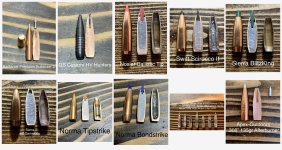
Chapter Summary
- Bullet construction determines how the projectile interacts with tissue after impact.
- Expansion, penetration, fragmentation, and retained weight are tradeoffs rather than independent scores.
- Sectional density is useful only when considered alongside construction and intended terminal behavior.
- Impact velocity is inseparable from bullet performance.
- No bullet design is universally best; each solves a different terminal problem.
Do I know how my chosen bullet is designed to behave across my actual impact-velocity window—or am I choosing it primarily by reputation, brand, or recovered-bullet appearance?
Next
Even when the bullet performs as intended, animals do not always react the same way. Biology introduces another layer of variability.
Chapter 8
Why Animals React Differently
Similar wounds do not always produce similar visible reactions.
Why Animals React Differently
Similar wounds do not always produce similar visible reactions.
FUNDAMENTAL PRINCIPLE #8
- Observed reaction is evidence, but it is not a direct measurement of lethality.
One of the most fascinating—and misleading—aspects of terminal ballistics is how differently animals can react to apparently similar wounds.
A deer struck through both lungs may collapse almost immediately. Another with devastating bilateral lung damage may sprint a considerable distance. One animal may mule kick. Another may hunch. Another may show almost no visible reaction before disappearing into cover and collapsing seconds later.
These observations often become the basis for strong opinions about bullets and cartridges. Sometimes the projectile truly did perform differently. Other times the visible difference was primarily biological.
Animals Are Not Ballistic Gelatin
Living animals are complex biological systems. Heart rate, blood pressure, oxygenation, adrenaline, muscle tension, body position, nervous-system state, exact anatomy, and the timing of the impact all vary.
The projectile path also varies. A difference of an inch can change which vessels, nerves, bones, or portions of an organ are damaged. A slightly different body angle can change the length of the wound path and the resistance encountered.
Terminal ballistics is therefore not random, but it contains biological variability that cannot be eliminated.
The 'Bang-Flop'
Immediate collapse is one of the most memorable hunting outcomes, but it should not automatically be interpreted as immediate death or proof of superior bullet performance.
Direct brain or upper-spinal injury can cause immediate collapse. So can major skeletal disruption, severe nervous-system effects, and other forms of rapid incapacitation. Pressure-related or reflexive neurological effects may also contribute in some cases.
An animal that collapses instantly may still require time for circulatory or respiratory failure to complete the process of death.
The Mule Kick
The classic mule kick is commonly associated with thoracic impacts, but it is not a diagnostic tool. It is better understood as a possible neuromuscular response to sudden trauma.
It may occur after a lethal heart or lung wound. It may occur with other impacts. It may be absent despite severe thoracic injury. Like most field reactions, it is a clue—not a definitive explanation.
The Hunched Posture
A hunched posture is often associated with abdominal injury, and that association can be useful. But pain, muscle guarding, organ damage, and stress can influence posture in multiple ways.
Observed body language should be considered alongside the known shot angle, point of impact, sound, tracks, blood, hair, and other evidence rather than treated as a standalone diagnosis.
The Sprinting Animal
A hard run after the shot is frequently interpreted as evidence that the bullet did not hit hard enough, or that it simply missed altogether. That conclusion can be wrong.
A mammal can continue moving for a short period after sustaining an unsurvivable wound. Oxygen already present in the blood and tissues does not vanish at the instant the heart or lungs are damaged. Until brain function deteriorates, purposeful or reflexive movement can continue.
A few seconds is enough time for an animal to cover substantial distance.
Why Reaction Alone Is a Poor Performance Metric
A dramatic collapse may look more effective than a short run, but the visible reaction does not reveal the entire wound.
A meaningful evaluation should consider the actual path through the animal, penetration, expansion or fragmentation, structures damaged, time to incapacitation, recovery distance, and whether the projectile behaved consistently with its intended design.
One animal's reaction should not be used to create a universal rule.
Why Hunters Remember the Exceptions
Human memory naturally favors unusual outcomes. The ordinary deer that runs thirty yards and falls is quickly forgotten. The one that collapses instantly becomes a story. The one that travels an unexpectedly long distance becomes another.
Over time, those memorable events can distort our perception of what a bullet 'always' or 'never' does. Anecdotal evidence is valuable, especially when many well-documented cases accumulate, but isolated outcomes should be interpreted cautiously.
COMMON MISCONCEPTION:
“A bullet that drops animals in their tracks is automatically more lethal than one after which animals run.”
Reality: Immediate collapse is an incapacitation event, not a complete diagnosis of the wound or the exact time of death. Conversely, a short run can occur after catastrophic and unsurvivable vital-organ damage.
AUTHOR INSIGHT:
The animal's reaction is one data point. The wound is the evidence. Whenever possible, I want to know the impact velocity, exact path, structures encountered, bullet behavior, internal damage, and recovery distance before drawing conclusions.
Chapter Summary
- Biological variability can produce different visible reactions to similar wounds.
- Immediate collapse does not necessarily mean immediate death.
- Running after the shot does not necessarily indicate bullet failure.
- Field reaction should be evaluated alongside wound evidence rather than used as a standalone performance metric.
Ask Yourself
Am I judging a bullet by the animal's first reaction—or by the complete evidence of what happened after impact?
Next
With the wound mechanisms, bullet mechanics, and biological variability established, we can now answer the question hunters ask most often: what bullet should I choose?
Chapter 9
What Bullet Should You Choose?
There is no universal best bullet—but there are better and worse matches for a specific job.
What Bullet Should You Choose?
There is no universal best bullet—but there are better and worse matches for a specific job.
FUNDAMENTAL PRINCIPLE #9
- Choose the bullet for the conditions it must handle, not for the reputation attached to its name.
After discussing death mechanisms, wound formation, hydraulic displacement, pressure effects, bullet construction, and animal reaction, the natural question becomes: so what bullet should I use?
The answer is not simply 'it depends.' The answer is that bullet selection becomes much clearer once the job is defined.
A hunting bullet should be selected according to the animal, expected impact-velocity range, likely shot angles, resistance the projectile may encounter, required penetration, and the kind of terminal behavior the hunter wants.
The goal is not to choose the toughest bullet, the highest-BC bullet, the bullet that retains the most weight, or the bullet that always exits. The goal is to choose a projectile that reliably and predictably creates sufficient damage in critical tissue under the conditions in which it will actually be used.
Start With the Job, Not the Brand
A whitetail hunter shooting inside 250 yards does not necessarily have the same terminal problem as an elk hunter preparing for steep quartering shots. A hunter using a high-velocity magnum at close range does not face the same impact conditions as a hunter using a moderate cartridge at extended distance.
Before choosing a bullet, define the realistic problem. What animal are you hunting? At what distances? What impact velocities will the bullet see? What shot angles are you willing to take? Do you want to intentionally break major bone, or do you primarily take broadside thoracic shots?
The answers determine what characteristics matter.
Impact Velocity Matters More Than the Headstamp
A bullet does not know which cartridge launched it. It responds to the conditions present when it reaches the animal.
Impact velocity influences how quickly a bullet expands, whether it fragments, how much mass it sheds, the frontal area it develops, and how deeply it penetrates.
A projectile that performs beautifully at 2,400 feet per second may behave too aggressively at 3,100 feet per second or expand less than desired at 1,700 feet per second. That is why bullet selection should be based on the expected impact-velocity window rather than muzzle velocity alone.
Expansion Must Be Adequate, Not Merely Present
A manufacturer may truthfully state that a bullet expands at a given minimum velocity, but hunters should still ask what that expansion looks like and whether it truly creates the terminal effect they want.
A small amount of nose deformation is not necessarily equivalent to a broad frontal area and substantial tissue displacement. Conversely, extremely rapid expansion is not automatically superior if it consumes too much useful mass and penetration too early.
The goal is useful expansion over the wound path—not merely proof that the bullet changed shape.
Penetration Must Reach the Structures That Matter
The projectile must be capable of reaching the vital anatomy from the shot angles the hunter is willing to take.
A broadside rib-and-lung shot places different demands on a bullet than a steep quartering shot through substantial muscle and bone. A high-shoulder impact places different demands than a behind-the-shoulder lung shot.
Bullet choice and shot placement therefore cannot be separated. If the chosen bullet is poorly matched to a particular impact condition, the correct response may be to change the shot placement—or decline the shot.
An Exit Wound Is Useful, but It Is Not the Definition of Success
Exit wounds can be valuable. They may increase external blood loss and make tracking easier when tracking is necessary.
But an exit is not proof that a bullet performed better. A projectile that expands minimally and exits with substantial remaining velocity may create less internal disruption than a projectile that expends more of its useful energy and momentum while destroying critical structures.
Conversely, a bullet that fails to exit because it expanded or fragmented too rapidly before reaching the vitals can perform poorly.
The correct question is not whether the bullet exited. The question is what it damaged before it stopped—or before it left the animal.
COMMON MISCONCEPTION:
“No exit means the bullet failed.”
Reality: A bullet that destroys critical tissue and stops after adequate penetration may have performed extremely well. A bullet that exits after minimal expansion may have performed less effectively. Exit wounds are useful evidence, not a universal definition of success.
Meat Damage Is a Tradeoff, Not a Standalone Goal
Hunters understandably want to preserve edible meat. But demands for immediate kills, zero meat loss, deep penetration, large exits, and heavy blood trails can conflict with one another.
A bullet that produces very little tissue disruption may preserve more meat around the wound path, but it may also create a narrower margin for error. A shoulder shot can damage edible tissue while also producing rapid incapacitation and access to highly vascular thoracic structures. A behind-the-shoulder shot may preserve more shoulder meat while allowing the animal to travel farther.
There is no free lunch in wound ballistics. The objective should be a reliable, humane kill with reasonable meat preservation—not the pursuit of zero damaged meat at the cost of inadequate terminal performance.
Match Bullet Design to Shot Placement
A hunter who intentionally takes high-shoulder or steep quartering shots should choose a projectile capable of handling the resistance and penetration demands involved at the expected impact velocity.
A hunter who limits shots to broadside thoracic presentations may have a much wider range of suitable bullet designs.
Soft and fragmenting bullets can be extremely effective when they have sufficient mass and are used within their impact limits. Tough bonded and monolithic bullets can excel when deep penetration and resistance to high-impact stress are priorities. Neither approach is universally superior.
A Practical Bullet-Selection Framework
Before selecting a bullet, work through the following questions:
- What animal am I hunting?
- What are my realistic minimum and maximum shot distances?
- What impact velocities will the bullet experience across that range?
- What shot angles am I willing to take?
- What resistance may the bullet encounter before reaching the most important vital structures?
- Do I need exceptional penetration, broad tissue disruption, or a particular balance of both?
- Will the bullet expand adequately at my lowest expected impact velocity?
- Will it retain enough useful mass and penetration at my highest expected impact velocity?
- Does my preferred shot placement match the bullet's construction?
- Does my rifle shoot the bullet with sufficient precision and consistency?
Putting the Major Bullet Categories Into Context
Traditional cup-and-core bullets often provide ready expansion and broad wound channels, but the softer examples may require more attention to impact velocity, starting mass, and resistance.
Bonded bullets generally offer greater weight retention and controlled expansion, making them useful when impact conditions are demanding, though they still require sufficient velocity to expand adequately which can make longer range or lower impact velocity shots less feasible.
Partition-style bullets attempt to combine early expansion with a protected rear section for penetration. Bullet symmetry and concentricity can sometimes suffer with these designs and make longer distance shots more challenging and a much higher risk.
Mushrooming monolithic bullets can provide deep penetration and high retained weight, but many perform best when impact velocity remains significantly high enough to produce substantial expansion.
Petal-shedding monolithics attempt to combine early disruption with a penetrating shank, producing more similar result to that of a cup-and-core bullet, but without the aspects of lead. This design has a limiting factor of requiring a well-designed ogive section, matched with the right alloy/hardness of material.
Soft, fragmenting, and match-derived designs can create broad wound zones and may remain highly effective at lower impact velocities, but they require enough starting mass and appropriate shot selection when impact velocity or resistance is high. A certain degree of knowledge is best for reliable and consistent results.
What About the 'Meat Saver'?
The desire for a bullet that kills instantly while damaging no edible tissue is understandable, but it is not a realistic universal standard.
Reliable, repeatable rapid killing requires damaging enough critical tissue to cause rapid physiological failure. Depending on shot placement, some of that tissue may be adjacent to edible muscle.
The better approach is to understand the bullet and place the shot accordingly. If impact velocity is extremely high and the bullet is relatively soft, a direct heavy-bone impact may not be the best use of that projectile. If the bullet is very tough and impact velocity is low, a low-resistance lung shot may produce less expansion than desired.
Meat preservation is best treated as one factor in the overall decision rather than the factor that overrides all others.
What About Match-Style Bullets?
The label on the box does not replace an examination of construction and field performance.
Some match-derived bullets use thin jackets, large internal cavities, or other features that can produce substantial fragmentation and broad wounds. With sufficient mass and appropriate impact velocity, such bullets have been used very successfully on game.
That does not make every match bullet an appropriate hunting bullet, nor does it make every shot appropriate for a soft projectile. The correct evaluation is construction, impact conditions, penetration requirements, and documented performance—not the word 'match' or 'hunting' by itself.
What About Bone?
Bone generally increases resistance and can accelerate expansion, fragmentation, or deformation. Whether that is beneficial or detrimental depends on the bullet and the impact conditions.
A bullet with sufficient mass and appropriate construction can penetrate major skeletal structures and continue into the vital region. A projectile that is too light or too aggressive for the impact velocity may lose too much useful mass early. A very tough bullet may handle bone easily but produce less disruption in lower-resistance tissue.
The hunter should visualize the entire wound path rather than reducing the shot to a single point on the animal's hide.
The Bottom Line
The best bullet is not automatically the one with the highest retained weight, the deepest penetration, the largest recovered diameter, the highest ballistic coefficient, or the most dramatic wound channel.
The best bullet is the one whose construction, mass, impact velocity, and terminal behavior match the animal, distance, shot angle, resistance, and shot placement being asked of it.
Bullet selection is not about discovering a magic projectile. It is about understanding tradeoffs well enough to choose deliberately.
AUTHOR INSIGHT:
When someone asks me, 'What bullet do you recommend?' my first questions should be about the rifle, cartridge, game, distance, expected impact velocity, and the shots the hunter intends to take. Without that context, a bullet recommendation is often little more than a preference.
Chapter Summary
- There is no universally best hunting bullet.
- Define the job before choosing the projectile.
- Impact velocity and bullet construction matter more than the cartridge name alone.
- Adequate expansion and adequate penetration must be balanced.
- Exit wounds, retained weight, and meat damage are considerations—not universal scorecards.
- Bullet choice and shot placement must be matched to one another.
Ask Yourself
If I changed my expected distance, impact velocity, animal, or shot angle, would my current bullet still be the best match—or am I treating one projectile as a universal solution?
Further Reading
For a deeper treatment of specific bullet constructions, common misconceptions, impact-velocity windows, sectional density, weight shedding, monolithic designs, and practical field examples, see the companion Hawkeye Ammosmithing article: “What Goes Into Picking the Right Bullet.” Link is below.
Next
Once the bullet and its required impact conditions are understood, cartridge and rifle selection become much simpler. Their job is to deliver that bullet accurately and within its useful terminal window.
Chapter 10
What Cartridge and Rifle Should You Choose?
Build the delivery system around the terminal job.
What Cartridge and Rifle Should You Choose?
Build the delivery system around the terminal job.
FUNDAMENTAL PRINCIPLE #10
- Choose enough cartridge to deliver the bullet you need—and enough rifle to place it accurately under real field conditions.
After choosing an appropriate bullet, the next question naturally becomes: what cartridge and rifle should I use?
For generations, hunters have debated cartridge names as though the headstamp itself determines terminal success. But once bullet behavior is understood, cartridge selection becomes a more practical engineering problem.
The objective is not to own the most powerful rifle. The objective is to deliver an appropriate bullet to the correct location, at an impact velocity that allows it to perform as intended, under the actual conditions of the hunt.
The Rifle and Cartridge Are a Delivery System
The cartridge provides the projectile with its initial velocity and influences how much velocity it retains at distance. The rifle provides the platform from which the hunter must place that projectile accurately.
Neither replaces the bullet's terminal behavior.
A more useful question than 'Which cartridge hits hardest?' is: 'Which cartridge allows my chosen bullet to arrive with the velocity and precision required for the job?'
Bigger Cartridges Solve Bigger—or More Distant—Problems
Large cartridges and magnums have legitimate advantages. They can launch heavier bullets, produce greater velocity, extend a bullet's useful impact-velocity window, flatten trajectory, and improve wind performance in some applications.
Those advantages matter when they solve a real problem.
A hunter pursuing deer inside 250 yards may not benefit from the same cartridge characteristics as a hunter preparing for large game at extended distance. A magnum is not automatically excessive, and a smaller cartridge is not automatically inadequate. The correct answer depends on the bullet and the conditions.
More Performance Always Has a Cost
Higher cartridge performance commonly brings increased recoil, muzzle blast, ammunition cost, powder consumption, rifle weight, shooter fatigue, and often shorter barrel life.
Those costs may be worthwhile. They may also reduce practical field performance if the hunter shoots the rifle less often, develops a flinch, struggles from unsupported positions, or avoids practicing because the rifle is unpleasant to use.
Performance that exists only on a ballistic chart is not useful if the shooter cannot apply it.
Impact Velocity Is More Important Than Muzzle Velocity
Muzzle velocity is the starting condition. Terminal performance occurs at impact.
A cartridge should therefore be evaluated by whether it keeps the chosen bullet within a useful terminal-performance window across the distances the hunter intends to shoot.
This is one reason high-ballistic-coefficient bullets and efficient cartridges have changed the conversation. A smaller cartridge launching an appropriately constructed, aerodynamically efficient bullet may maintain enough impact velocity to perform effectively at distances where older assumptions would have demanded a larger cartridge.
Conversely, a very fast cartridge can create problems at close range if the chosen bullet is too soft or too light for the resulting impact conditions.
The Bullet Is Still the Hero
Large magnum cartridges can be excellent tools, and I use them. But the magnum designation does not replace bullet selection.
A smaller cartridge using a bullet that expands and disrupts tissue effectively at the expected impact velocity can outperform a much larger cartridge using a projectile poorly matched to the same conditions.
The larger cartridge provides additional capability. The bullet determines whether that capability becomes useful terminal work.
Recoil Is Part of Terminal Performance
Recoil is often treated as a comfort issue. It is more than that.
A bullet cannot perform if it misses the intended anatomy. Excessive recoil can degrade practical accuracy, encourage flinching, slow follow-up shots, reduce practice volume, and undermine confidence.
The animal does not experience the recoil. The hunter does.
If a less powerful cartridge allows substantially better placement while still delivering an appropriate bullet at adequate impact velocity, that combination may be the more effective hunting system.
There Is No Universal 'Enough Gun'
The amount of rifle required depends on the problem being solved.
Game size matters. So do bullet construction, impact velocity, shot distance, shot angle, environmental conditions, and the shooter's capabilities.
A cartridge that is entirely appropriate for one hunt may be poorly suited to another. A magnum may provide meaningful range or bullet-weight advantages in one application and little practical benefit in another.
Cartridge Selection as a Performance Window
One of the most useful ways to evaluate a cartridge is to think of it as a way to create and maintain a performance window.
At the near end, the bullet should not be driven into likely impact conditions so extreme that its construction becomes poorly matched to the resistance encountered. At the far end, the bullet should retain enough velocity to expand and disrupt tissue adequately.
The cartridge, barrel length, muzzle velocity, bullet ballistic coefficient, atmospheric conditions, and maximum intended range all influence the size of that window.
The Rifle Must Work in the Real World
A hunting rifle is not selected only from a bench-rest group or a velocity table.
The rifle must be carried, mounted, aimed, and fired from realistic positions. Weight, balance, stock fit, trigger characteristics, optic setup, reliability, and recoil all affect the hunter's ability to place the shot.
A theoretically superior ballistic system that the hunter cannot deploy confidently in the field is not superior in practice.
A Practical Cartridge-and-Rifle Framework
Rather than asking which cartridge is best, ask:
- What bullet do I want to use, and why?
- What impact-velocity range does that bullet need for the terminal behavior I want?
- What is my realistic maximum hunting distance?
- Can the cartridge keep that bullet within its useful performance window at that distance?
- Will close-range impact velocity create conditions the bullet is poorly suited to handle?
- Can I shoot the rifle accurately from realistic field positions?
- Can I manage the recoil without degrading practice, confidence, or shot placement?
- Does the larger or faster cartridge solve an actual problem for my hunting?
The Complete Hunting System
The rifle, cartridge, bullet, optic, and shooter should be treated as one system.
The bullet must be appropriate for the terminal job. The cartridge must deliver it within the required velocity window. The rifle and optic must allow the hunter to place it accurately. The hunter must understand the system well enough to recognize both its capabilities and its limits.
When those pieces work together, the headstamp becomes far less important than many traditional cartridge debates suggest.
COMMON MISCONCEPTION:
“More cartridge is always more ethical because it provides more killing power.”
Reality: Additional cartridge performance is useful only when it contributes to a better terminal result. If greater recoil reduces placement or the bullet is poorly matched to the impact conditions, more muzzle energy does not guarantee a better outcome.
AUTHOR INSIGHT:
I use large magnums because they solve real problems for some applications. I also use smaller cartridges because they solve other problems more efficiently. The mistake is not choosing one or the other. The mistake is assuming cartridge size can compensate for a poor understanding of the bullet and the shot.
Chapter Summary
- The cartridge and rifle are the delivery system for the bullet.
- Larger cartridges provide real advantages when those advantages solve a real problem.
- Impact velocity matters more to terminal performance than muzzle velocity by itself.
- Recoil and practical field accuracy are part of terminal performance.
- The best hunting system is the one that reliably places an appropriate bullet into critical anatomy within the bullet's useful impact conditions.
Ask Yourself
Does my cartridge provide a capability I actually need, or am I accepting more recoil, blast, expense, and complexity for performance that does not improve my real hunting outcome?
Next
The final chapter brings the entire chain together—from bullet impact to tissue damage, physiological failure, and the decisions hunters make before the shot is ever fired.
Chapter 11
Final Thoughts
The goal is not to maximize a number. The goal is to produce the right damage in the right place.
Final Thoughts
The goal is not to maximize a number. The goal is to produce the right damage in the right place.
At the beginning of this publication, we asked a seemingly simple question: what actually kills game animals?
The answer is more complex than a single energy figure, a caliber, an exit wound, a recovered-bullet photograph, or a dramatic reaction at the shot.
Animals die because critical physiological systems fail. Circulation collapses. Oxygen delivery becomes inadequate. The central nervous system ceases to function. Organs fail. A projectile matters because of the damage it creates and the biological consequences that follow.
The Complete Chain
A useful way to summarize terminal ballistics is as a chain of cause and effect:
Rifle & Cartridge → Bullet at Impact → Bullet Behavior → Tissue Damage → Physiological Failure → Death
The rifle and cartridge establish the conditions at impact. Bullet construction determines how the projectile responds to those conditions. That behavior determines how tissue is crushed, cut, stretched, displaced, and fragmented. The location and severity of that damage determine which physiological systems fail and how quickly.
Every major topic in this publication fits somewhere within that chain.
Energy Is Potential, Not a Verdict
Kinetic energy is a useful physical quantity, but it does not tell the entire terminal story. A projectile can arrive with enormous energy and use relatively little of it to damage critical tissue. Another can arrive with substantially less energy and convert enough of its available capacity into effective disruption to produce a faster result.
Energy matters. What the bullet does with it matters more.
The Wound Is the Evidence
Permanent cavities matter because they represent lasting tissue destruction. Temporary cavities matter because rapid displacement can stretch and tear tissue beyond the direct projectile path. Hydraulic displacement explains how much of that motion begins. Pressure effects are real components of the wound event, but they do not replace anatomy or the need for sufficient vital-tissue damage.
The wound should therefore be evaluated as a complete event rather than reduced to a single favorite metric.
Bullet Construction Is the Bridge Between External and Terminal Ballistics
External ballistics tells us how the bullet reaches the animal. Terminal ballistics begins when it arrives.
Bullet construction is the bridge between the two. The same impact velocity can produce very different results from different projectiles. The same bullet can produce very different results at different impact velocities.
That is why bullet choice should precede many cartridge debates. Once the required terminal behavior is defined, the delivery system can be built around it.
There Is No Universal Best
There is no universally perfect bullet, cartridge, rifle, or shot placement for every animal and every condition.
Every choice involves tradeoffs. Softer bullets can create broad disruption but may demand more attention to impact velocity, mass, and resistance. Tougher bullets can penetrate deeply but may require more velocity or resistance to expand as aggressively. Larger cartridges can extend performance windows but bring recoil and other costs. Smaller cartridges can be efficient and easy to shoot but must still deliver the chosen bullet within its useful terminal range.
The hunter's job is not to eliminate tradeoffs. It is to understand them.
The Most Important Skill Is Understanding the System
Modern hunters have access to exceptionally capable bullets, cartridges, rifles, optics, and ballistic tools. The limiting factor is often not equipment.
It is understanding.
A hunter who understands the bullet's construction, expected impact velocity, likely shot path, anatomy, and limitations can make informed decisions before and during the hunt. That knowledge is more useful than memorizing a minimum energy number or repeating a rule that ignores the conditions of the shot.
AUTHOR INSIGHT:
The goal is not to maximize velocity, energy, expansion, penetration, fragmentation, retained weight, an exit wound, or hydrostatic shock.
The goal is to create sufficient damage to critical tissue to rapidly initiate the physiological processes that lead to death.
A Final Word on Ethics
Ethical hunting is often discussed as though it can be reduced to a cartridge minimum or a distance limit printed on a chart. Equipment matters, but ethics also requires understanding.
A responsible shot is one in which the hunter has a reasonable basis for believing the complete system—the shooter, rifle, cartridge, bullet, impact conditions, shot angle, and anatomy—can produce the intended result.
That requires knowing when the conditions are right. It also requires knowing when they are not.
Final Takeaways
- Bullets damage tissue; physiological failure causes death.
- Energy is potential, not a standalone wounding mechanism.
- Permanent and temporary cavities are different parts of the same wound event.
- Hydraulic displacement and pressure effects are real, but they do not replace adequate vital-tissue destruction.
- Bullet construction and impact velocity determine terminal behavior.
- Animal reaction alone is an unreliable measure of lethality.
- There is non universal best bullet, cartridge, or rifle.
- The most effective hunting system is the one whose components are deliberately matched to the actual job.
“The goal is not to maximize a number.
The goal is to produce the right damage, in the right place, under the conditions of the shot.”
About the AuthorThe goal is to produce the right damage, in the right place, under the conditions of the shot.”
Aaron Peterson is the founder of Hawkeye Ammosmithing and a precision reloader and long-range hunting specialist. His work focuses on practical external and terminal ballistics, bullet construction and performance, field observations, and the application of ballistic data to real hunting decisions.
The methods, observations, and conclusions presented in this publication are intended to encourage informed analysis rather than brand loyalty or one-size-fits-all rules.
Hawkeye Ammosmithing
Data-Driven Ballistics. Tested & Proven.
Companion ResourcesData-Driven Ballistics. Tested & Proven.
- "What Goes Into Picking the Right Bullet" — a deeper discussion of bullet-selection tradeoffs and construction. https://hawkeyeammosmithing.com/threads/what-goes-into-picking-the-right-bullet.11/
- "Choosing and Testing Monolithic Bullets- A Practical Guide." https://hawkeyeammosmithing.com/thr...ting-monolithic-bullets-a-practical-guide.46/
- "The Misconceptions Surrounding Terminal Performance of Bullets" https://hawkeyeammosmithing.com/thr...rrounding-terminal-performance-of-bullets.10/
- Future Hawkeye Ballistics Series volumes on bullet construction, field performance, cross-sections, measurements, and comparative projectile design.
 Instagram
 YouTube
 Facebook